In October 2025, inflation in Argentina showed a slight acceleration again, marking 2.3%. This figure is slightly above September's 2.1% and comes during a month crossed by legislative elections, a factor that traditionally disrupts expectations and causes an increase in demand for dollar coverage.
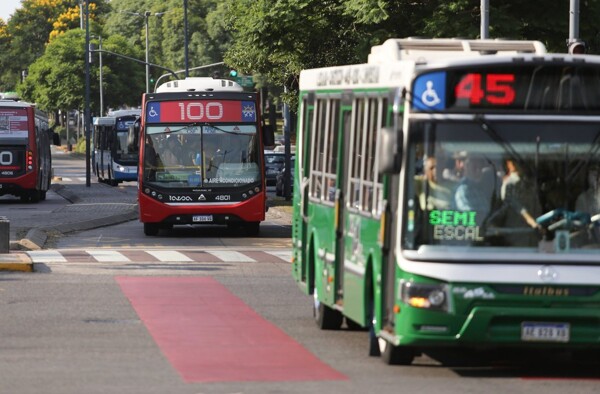
Recall that Argentina's inflation for December 2023, according to official data from the National Institute of Statistics and Censuses (INDEC), reached a monthly variation of 25.5% in the Consumer Price Index (IPC), which puts the current figure in a different perspective. According to the official report, the 'Transport' sector led the increases with 3.5%, driven by adjustments in fuels and services linked to urban mobility.
The annual inflation rate in Buenos Aires stood at 33.6%, marking a slight decrease compared to September. The challenge for the coming months will be to sustain the trend without new financial shocks or political tensions eroding the stabilization program. The seasonal price category moved by 2.8%, while regulated prices advanced by 2.6%, and core inflation was at 2.2%, an indicator closely watched by analysts as it excludes volatile components and administered taxes.
The role of the exchange rate was decisive, especially in a month when electoral uncertainty generated additional demand for dollars and a temporary increase in the exchange rate gap. Even so, the inflationary inertia persists and requires a level of fiscal and monetary coordination that still faces structural obstacles.
After the data was released, Minister of Economy Luis Caputo highlighted that the annual comparison already accumulates eighteen consecutive months of deceleration and emphasized that the October figure is the lowest since July 2018. Most consultants expect the year to close with an inflation rate close to 29.6%, although the margin of uncertainty remains high.
In parallel, the City of Buenos Aires registered a 2.2% increase, in line with the national measurement. This data, which implies a 31.3% annual variation and a 24.8% accumulated rate so far this year, revives the debate about the consistency of the disinflation process in a country that still drags on with exchange rate tensions, fiscal pressures, and depressed consumption.
For Caputo, these elements confirm the solidity of the economic program and the continuity of the stabilization process, beyond the political turbulence of the last quarter. President Javier Milei, for his part, insisted again that Argentina will enter a path of convergence towards international inflation levels and stated that, according to the monetary models promoted by the Government, the monthly rate could break below 1% by mid-2026, as long as the fiscal anchor is maintained and there are no deviations in budget execution.
"The annual variation of the National IPC was 31.3%, registering eighteen consecutive months of deceleration in the comparison against the same month of the previous year," stated Minister of Economy Luis Caputo, and he emphasized that it is "the lowest since July 2018".
The official also highlighted that the accumulated inflation in the first ten months of the year is the lowest for that period since 2017, when the index marked 19.4%.
During October, the cost of living in the City of Buenos Aires again showed an increase of 2.2%, the same percentage as in September, according to the report from the city's Institute of Statistics and Censuses (Idecba). In the last twelve months, the accumulated inflation reached 33.6%, showing a slight deceleration compared to the previous month.